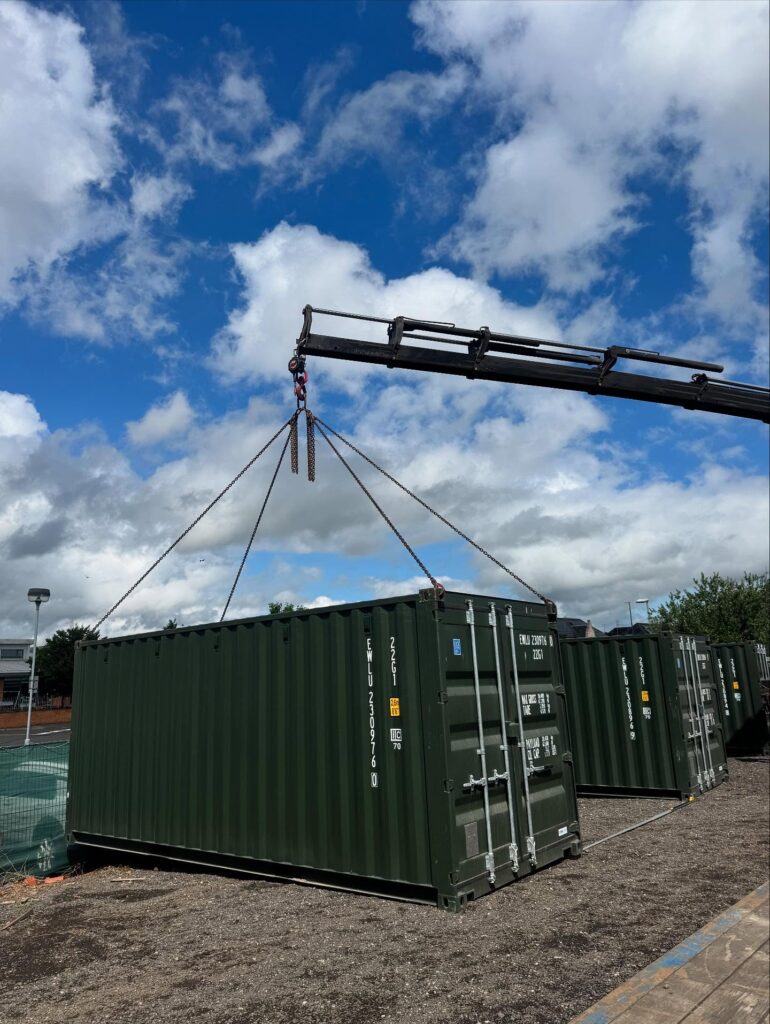
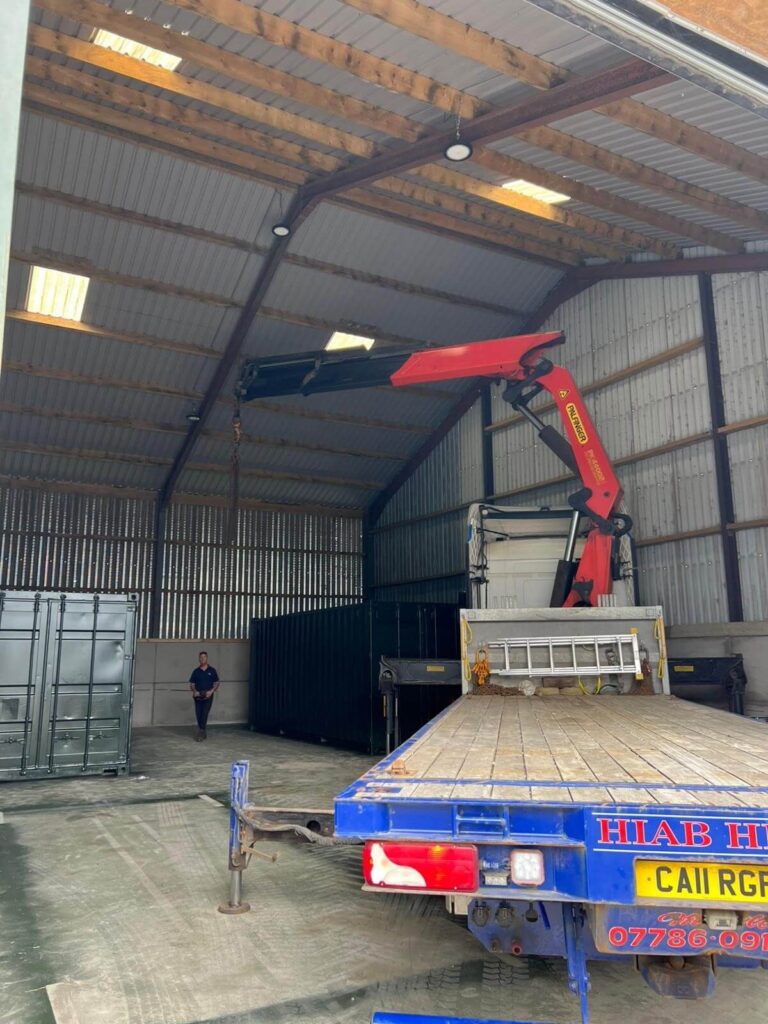
HIAB trucks are used for lifting, loading, transporting, and unloading heavy, bulky, or awkward items. They’re especially useful when goods need to be moved safely and placed exactly where they’re needed.
A HIAB truck is basically a lorry with a hydraulic crane mounted onto it. Instead of using one vehicle for transport and another machine for lifting, a HIAB truck does both jobs in one go. That’s why these vehicles are so popular in construction, logistics, landscaping, utilities, farming, manufacturing, and industrial transport.
Whether you’re moving building materials, machinery, shipping containers, steel beams, timber, or site cabins, a HIAB truck can make the job quicker, safer, and far less stressful.
What Is a HIAB Truck?
A HIAB truck is a truck fitted with a lorry-mounted crane. The crane is powered by a hydraulic system, allowing it to lift and move heavy loads from the ground onto the vehicle, or from the vehicle to a chosen location.
The word “HIAB” originally comes from the name of a well-known crane manufacturer. Over time, though, people began using the term more generally to describe trucks with mounted cranes.
These trucks come in different sizes and lifting capacities. Some are small enough for tight urban deliveries, while others are large enough to handle containers, machinery, and major construction materials. The right HIAB truck depends on the weight of the load, the available access, and how far the crane needs to reach.
How Does a HIAB Truck Work?
A HIAB truck works by using hydraulic power to operate the crane arm. The operator controls the crane to lift, swing, extend, and lower the load carefully.
Before any lift begins, the operator will usually check the weight of the load, the lifting distance, the ground surface, overhead obstacles, and the space available around the vehicle. Stabiliser legs are often extended from the truck to keep it steady during lifting.
Once everything is safe, the crane can lift the item onto the truck bed or place it onto the ground, driveway, construction site, yard, or warehouse area. This makes HIAB trucks extremely useful for jobs where forklifts or fixed cranes are not available.
Common Uses of HIAB Trucks
Construction material delivery
One of the most common uses of HIAB trucks is delivering construction materials. Building sites often need heavy supplies delivered quickly and placed in practical locations. A standard delivery truck may only be able to drop materials at the roadside, but a HIAB truck can lift them over fences, onto site areas, or closer to where tradespeople need them.
HIAB trucks are often used to transport and unload materials such as bricks, blocks, timber, steel beams, roof trusses, concrete products, pipes, drainage supplies, paving slabs, scaffolding, and insulation materials.
This saves a lot of time on-site. Instead of workers manually moving materials across the site, the crane can position the load more accurately from the start.
Moving heavy machinery
HIAB trucks are also used to move heavy machinery and equipment. This is common for factories, workshops, farms, warehouses, garages, and construction companies.
Examples include generators, compressors, pumps, industrial tools, manufacturing equipment, plant machinery, machine parts, and workshop equipment.
Because the crane is attached to the truck, the same vehicle can lift the machinery, transport it, and unload it at the destination. That means fewer delays, less equipment hire, and fewer people needed to complete the job.
Shipping container transport
HIAB trucks are often used to move shipping containers and storage containers. These containers are heavy and awkward, so they need proper lifting equipment.
A HIAB truck can lift a container from the ground, load it onto the vehicle, transport it, and place it in position at the new site. This is useful for construction companies, schools, farms, retail businesses, warehouses, and anyone using containers for temporary or permanent storage.
They’re also handy for moving welfare units, site offices, portable cabins, and modular units.
Site cabins and portable building delivery
Construction sites often use portable cabins as offices, canteens, changing rooms, storage rooms, and welfare spaces. A HIAB truck can deliver these cabins and position them where they need to go.
This is particularly helpful when the site has limited access or when the cabin needs to be placed in a specific spot. Rather than bringing in a separate crane, a HIAB truck can often handle the whole delivery and placement process.
Landscaping and garden projects
Landscaping work often involves heavy or awkward materials. Think large trees, bulk bags of soil, decorative stone, paving slabs, timber sleepers, fencing, garden rooms, ponds, sculptures, and water features.
A HIAB truck can lift these items safely and place them closer to the work area. For larger garden projects, that can make a huge difference. Nobody wants to carry heavy stone or paving across a long driveway if a crane can do the hard work instead.
Utility and infrastructure work
Utility companies use HIAB trucks for moving items such as pipes, cables, street lighting columns, barriers, road plates, poles, drainage systems, and electrical equipment.
These jobs often take place in busy or restricted areas, so having a vehicle that can both transport and lift equipment is a real advantage. It helps teams work faster while keeping heavy lifting controlled and organised.
Steel and timber transport
HIAB trucks are widely used to move long or heavy materials such as steel beams, timber packs, cladding, roofing sheets, and structural components.
These materials can be difficult to unload safely without the right equipment. A HIAB truck allows the operator to lift them carefully and place them on-site without relying on forklifts or manual handling.
Agricultural and farm work
Farms often need to move machinery, tanks, fencing, feed equipment, gates, water troughs, and building materials. HIAB trucks are useful because farms may not always have easy access to cranes or heavy lifting equipment.
A HIAB truck can travel to rural locations and handle loading and unloading on-site. That makes it a practical option for agricultural deliveries and farm improvement projects.
Event and temporary structure transport
HIAB trucks can also be used for events and temporary installations. They may transport and position stages, lighting equipment, barriers, cabins, generators, signage, fencing, and temporary structures.
For events with tight setup schedules, having one vehicle that can deliver and lift equipment can be a big help.
Recovery and specialist transport
In some cases, HIAB trucks are used for specialist recovery jobs or unusual transport needs. They can help move damaged equipment, large objects, containers, or items that cannot easily be loaded by a forklift.
This makes them a flexible choice for businesses dealing with awkward, oversized, or one-off lifting jobs.
Why Are HIAB Trucks So Useful?
The biggest reason HIAB trucks are so useful is simple: they combine transport and lifting in one vehicle. That means fewer machines, fewer delays, and fewer moving parts in the job.
For many projects, hiring a standard truck is not enough because the load still needs to be lifted on and off. Hiring a separate crane may solve the lifting problem, but it can add cost and planning. A HIAB truck sits neatly in the middle by offering both services at once.
Key benefits include:
- Fast loading and unloading
- Reduced manual handling
- Improved site safety
- Accurate placement of heavy items
- Less need for extra equipment
- Better access for awkward locations
- Lower overall project disruption
- More efficient deliveries
In plain English, a HIAB truck helps get heavy things where they need to go without making the job harder than it has to be.
What Can a HIAB Truck Carry?
A HIAB truck can carry a wide range of items, depending on its size, crane capacity, and vehicle load limit. Smaller HIAB trucks may be used for light construction goods or domestic deliveries, while larger models can handle heavy machinery, containers, and structural materials.
Common loads include:
- Building materials
- Steel beams
- Timber packs
- Shipping containers
- Site cabins
- Generators
- Industrial machinery
- Concrete products
- Pipes and drainage materials
- Landscaping supplies
- Farm equipment
- Roadwork equipment
The important thing is that the load must be suitable for the truck’s lifting and carrying limits. That’s why it’s always best to provide accurate information about the item before arranging HIAB transport.
Where Can HIAB Trucks Deliver?
HIAB trucks can deliver to many different places, including construction sites, homes, farms, warehouses, factories, yards, commercial premises, and roadside locations.
However, access matters. The truck needs enough space to park safely, extend its stabiliser legs, and operate the crane. Low bridges, narrow roads, soft ground, overhead cables, trees, parked vehicles, and uneven surfaces can all affect the delivery.
Before booking a HIAB truck, it’s worth checking whether the site has enough room for the vehicle and crane operation. A little planning upfront can prevent a lot of hassle later.
HIAB Trucks vs Standard Delivery Trucks
A standard delivery truck can transport goods, but it usually cannot lift heavy items without help. That means you may need a forklift, crane, loading bay, or several workers to unload the goods.
A HIAB truck, on the other hand, arrives with its own lifting equipment. This makes it much more useful for heavy, bulky, or awkward deliveries.
Standard delivery trucks are suitable for:
- Palletised goods
- Light materials
- Deliveries with forklift access
- Simple loading dock deliveries
HIAB trucks are better for:
- Heavy construction materials
- Containers and cabins
- Machinery and equipment
- Sites without unloading equipment
- Jobs needing precise placement
HIAB Trucks vs Mobile Cranes
A mobile crane is designed mainly for lifting, while a HIAB truck is designed for both lifting and transport. For very heavy or complex lifts, a mobile crane may be required. But for many everyday lifting and delivery jobs, a HIAB truck is more practical and cost-effective.
For example, if you only need to move materials from one site to another and place them safely, a HIAB truck may be enough. But if the lift involves extreme weight, height, or reach, a dedicated crane may be the better option.
Are HIAB Trucks Safe?
Yes, HIAB trucks are safe when operated by trained and experienced professionals. Like any lifting equipment, safety depends on proper planning, correct operation, and staying within the truck’s limits.
Operators usually consider several factors before lifting, including the load weight, lifting radius, ground conditions, weather, overhead hazards, and space around the vehicle.
Stabiliser legs are used to help keep the truck steady. Loads are also secured properly before transport to prevent movement on the road.
Safety is one of the biggest reasons to use a HIAB truck instead of trying to handle heavy loads manually. The right equipment reduces the risk of injury, damage, and delays.
When Should You Hire a HIAB Truck?
You should hire a HIAB truck when you need to transport and lift something that cannot be moved easily by hand or unloaded using basic equipment.
A HIAB truck is a good choice when:
- The item is too heavy to lift manually
- The delivery site has no forklift
- The load needs to be placed in a specific area
- The item is awkward, long, or oversized
- You want to avoid hiring a separate crane
- You need a faster and safer delivery method
Common examples include moving containers, delivering steel beams, placing garden rooms, transporting machinery, delivering timber, and unloading building materials.
What Information Is Needed Before Booking a HIAB Truck?
To arrange the right HIAB truck, it helps to provide clear details about the job. The more information available, the easier it is to choose the correct vehicle and avoid problems on the day.
Useful details include:
- The size and weight of the load
- The collection and delivery addresses
- Whether access is narrow or restricted
- Whether the ground is level and firm
- How far the crane needs to reach
- Whether there are overhead cables or trees
- Whether the item needs special lifting attachments
Even simple details can make a big difference. For instance, lifting a load right next to the truck is very different from lifting it over a wall or across a driveway.
Final Thoughts
HIAB trucks are used for lifting, transporting, and placing heavy or bulky loads safely and efficiently. They’re popular because they combine the power of a crane with the practicality of a truck.
From construction materials and machinery to shipping containers, site cabins, landscaping supplies, and utility equipment, HIAB trucks handle jobs that standard delivery vehicles simply can’t manage on their own.
So, if you need to move something heavy and want it placed exactly where it needs to go, a HIAB truck could be the perfect solution. It saves time, reduces manual effort, and keeps the job moving without unnecessary fuss.
What We Get Asked…
What does HIAB stand for?
HIAB comes from the name of a crane manufacturer. Today, many people use the term to describe lorries fitted with hydraulic cranes.
What is a HIAB truck used for?
A HIAB truck is used to lift, load, transport, and unload heavy or bulky goods. It is commonly used for construction materials, containers, machinery, site cabins, and landscaping supplies.
Can a HIAB truck lift a shipping container?
Yes, many HIAB trucks can lift and transport shipping containers, depending on the container size, weight, crane reach, and truck capacity.
Is a HIAB truck the same as a crane truck?
Yes, the terms are often used in a similar way. A HIAB truck is a type of crane truck with a hydraulic crane mounted onto the vehicle.
Do I need a HIAB truck for building materials?
You may need a HIAB truck if the building materials are heavy, bulky, or need to be placed directly onto a site rather than unloaded at the roadside.
Can HIAB trucks deliver to homes?
Yes, HIAB trucks can deliver to residential properties, provided there is safe access and enough room for the vehicle and crane to operate.
How much can a HIAB truck lift?
The lifting capacity depends on the truck and crane model. It also depends on how far the crane needs to reach. A load lifted close to the truck is usually easier to handle than one lifted farther away.
Are HIAB trucks suitable for tight spaces?
Some HIAB trucks can work in tighter spaces, but they still need enough room for safe parking, stabiliser legs, and crane movement. Access should always be checked before booking.