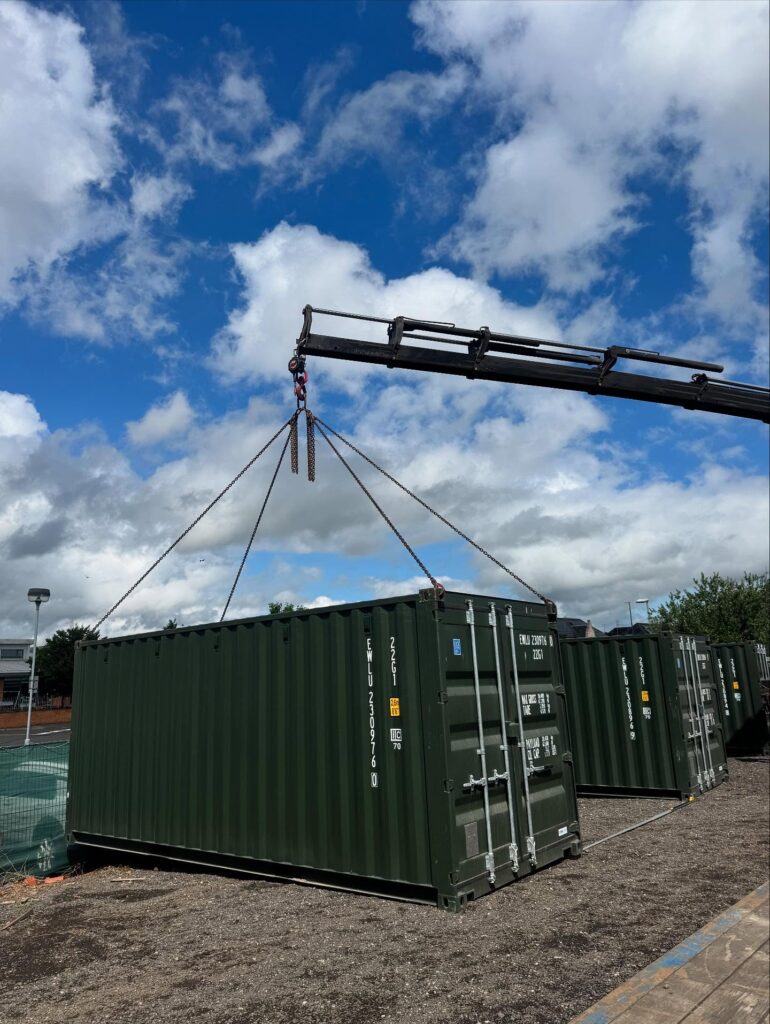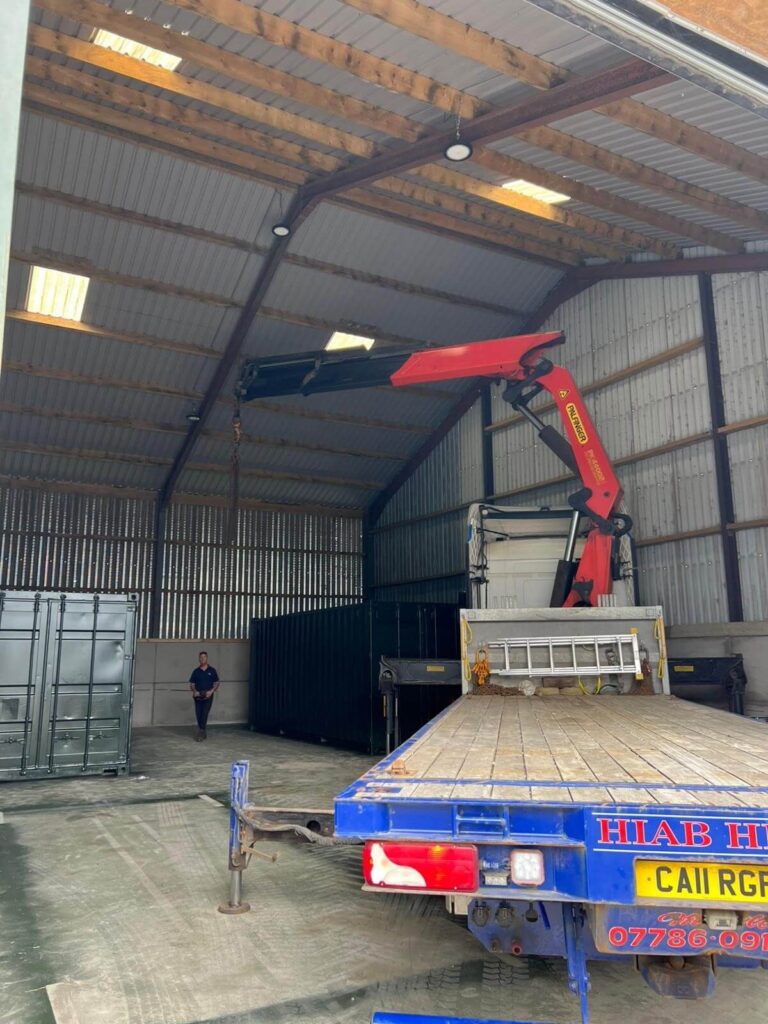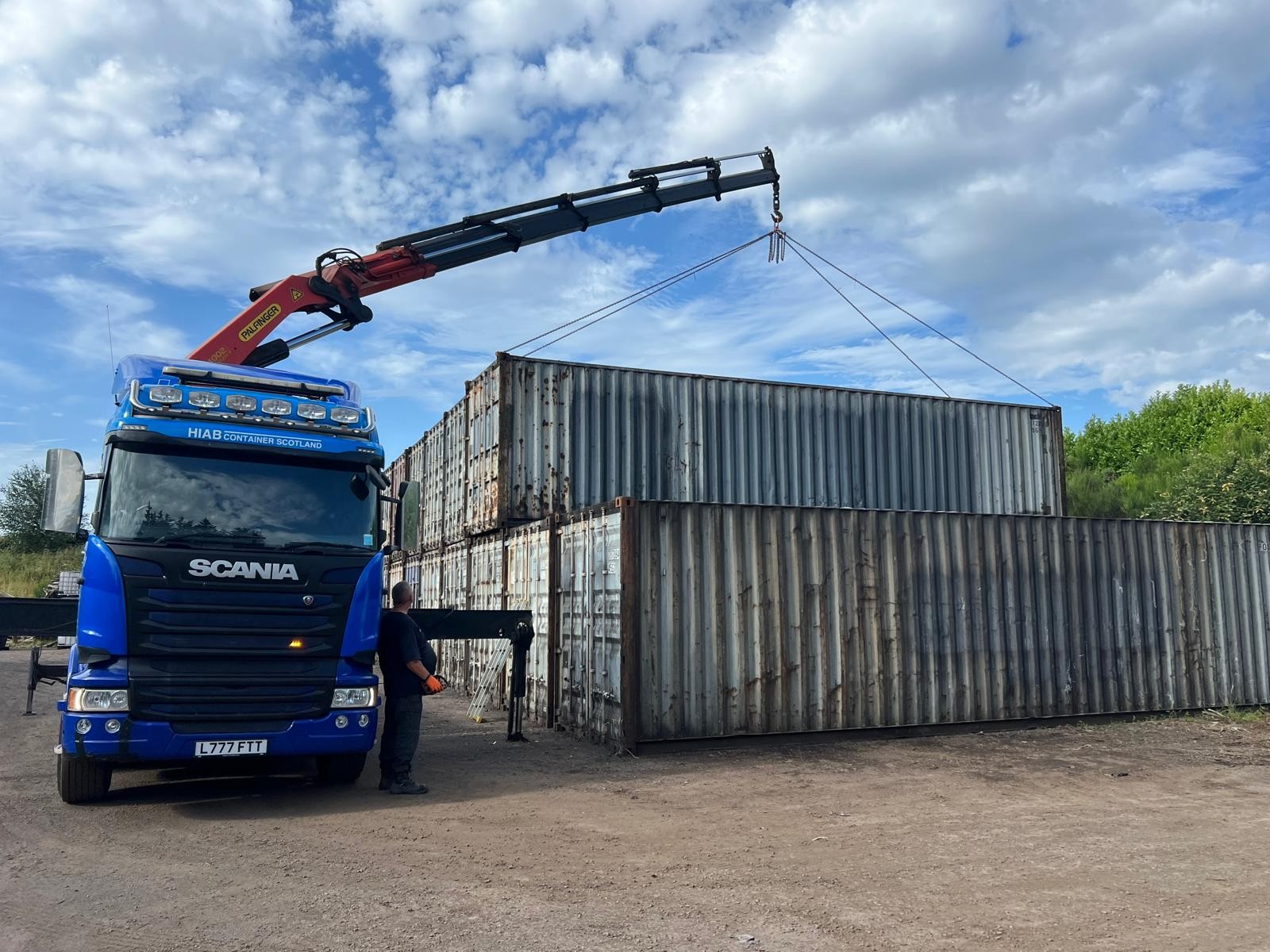
360-degree HIAB lifting refers to the ability of a lorry-mounted hydraulic crane to lift and position loads around the vehicle through a complete circle. Instead of being restricted mainly to the sides and rear of the lorry, a suitably configured crane can work through a much wider operating area, including positions towards or over the front of the vehicle.
This additional working range can make a considerable difference on sites where space is restricted, access is difficult or there simply is not enough room to keep repositioning a large crane lorry.
The important point is that 360-degree lifting is not simply about the crane being able to rotate. The vehicle, crane and stabiliser arrangement must be designed so that the lorry remains stable while lifting within the permitted working zones.
If you are unfamiliar with the wider range of jobs these vehicles can undertake, our guide to what HIAB trucks are used for explains the most common lifting, transport and placement applications.
How Does 360-Degree HIAB Lifting Work?
A HIAB crane is normally mounted directly onto a lorry chassis. Hydraulic power operates the crane boom, allowing loads to be lifted from the ground, moved through the crane’s working radius and positioned at the required location.
For full 360-degree operation, several parts of the vehicle and crane setup work together.
Front Stabiliser Legs
One of the most important differences is the use of additional stabilisers towards the front of the vehicle.
A crane places significant forces through the lorry chassis when it lifts a heavy load. Standard stabiliser arrangements can provide excellent support to the sides and rear of the truck, but lifting towards the front of the cab can introduce different stability limitations.
A 360-degree HIAB vehicle can use additional hydraulic front stabiliser legs, often working together with reinforced or extended chassis arrangements.
These stabilisers increase the support footprint of the vehicle and help distribute the forces created by the crane. This makes lifting within a much wider area around the truck possible, subject to the individual crane’s rated capacity and load chart.
The stabilisers must still have suitable ground beneath them. Soft ground, voids, slopes or inadequate space for deploying the legs can affect whether a planned lift is possible.
The Crane’s Slewing System
The crane rotates around what is generally known as its slewing or slew mechanism.
On a 360-degree crane, this allows the boom assembly to rotate around the crane base so the operator can work in different directions without continually moving the lorry itself.
This is particularly useful when several items need collecting or placing around one working position.
For example, the HIAB could arrive beside a construction site, deploy its stabilisers and then lift materials from the vehicle before positioning them at different points around the crane’s available working radius.
The practical lifting capacity will still depend on factors including:
- The weight of the load.
- The distance between the crane and the load.
- The boom extension required.
- The direction of the lift.
- The stabiliser configuration.
- The crane and vehicle specification.
- Ground and site conditions.
Being able to rotate through 360 degrees therefore does not mean that the crane can lift its maximum load at maximum reach in every direction. The operator must work within the rated capacities of the particular crane.
Remote-Controlled HIAB Operation
Many modern HIAB cranes can be operated using radio remote controls.
This allows the operator to move away from a fixed control position on the vehicle and choose a suitable viewing point while carrying out the lift.
Being able to walk around the working area can provide a clearer view of the load, lifting path and final placement position.
This becomes particularly useful during 360-degree operations because the crane may be working on different sides of the vehicle during the same job.
The operator can position themselves where they have a clear view while keeping outside the danger area created by the suspended load.
Why Is 360-Degree HIAB Lifting Useful?
The main advantage is flexibility.
A conventional transport vehicle may need to be positioned extremely carefully so the unloading equipment can reach the required area. If the load cannot be reached, the vehicle may have to move and set up again.
On some sites, repositioning is inconvenient. On others, it can be practically impossible.
A 360-degree HIAB can provide considerably more choice over where the vehicle is positioned and where the load is placed.
This is one of the main differences between a crane-equipped lorry and ordinary haulage. Our guide explaining how a HIAB differs from a standard delivery lorry looks at this in more detail.
Restricted-Access Sites
Limited access is one of the clearest situations where 360-degree lifting can be useful.
Construction projects, commercial premises and residential sites do not always provide large open areas for heavy vehicles.
The lorry may have to work from:
- A narrow access road.
- A restricted construction compound.
- A small commercial yard.
- A residential street.
- A confined industrial site.
- A loading area surrounded by buildings or equipment.
Once a suitable working position has been established, the crane’s wider operating area may allow several lifts to be completed without moving the vehicle.
This can reduce unnecessary vehicle movements and make complicated sites easier to manage.
Lifting Over the Cab
One of the major benefits associated with a properly configured 360-degree crane is the ability to work towards the front of the vehicle.
Imagine a HIAB arrives at a site where the only practical parking position means the required placement area is beyond the lorry’s cab.
With a crane that cannot safely operate within that area, the driver may have to find another position or additional lifting equipment may be required.
A suitable 360-degree HIAB setup provides considerably greater flexibility by allowing the crane to work within approved lifting areas around the entire vehicle.
This can be useful when delivering items such as:
- Shipping containers.
- Storage containers.
- Site cabins.
- Portable offices.
- Construction materials.
- Steelwork.
- Concrete blocks.
- Machinery.
- Plant and equipment.
- Generators.
Every lift still needs to be planned around the actual weight, dimensions and required crane reach.
Reaching Behind Buildings and Site Obstacles
Crane reach can also allow a HIAB to place a load beyond obstacles that would otherwise prevent direct vehicle access.
Depending on the crane specification and lifting requirements, this might include lifting across or beyond:
- Walls.
- Fencing.
- Barriers.
- Parked equipment.
- Landscaping.
- Building materials.
- Other vehicles.
- Parts of a construction site.
This is one reason HIAB vehicles are frequently useful for transporting and moving containers, particularly where the final position cannot be reached directly by the vehicle.
The vehicle does not necessarily need to drive directly beside the final placement position. Instead, it may be possible to establish a suitable lifting position and use the crane’s reach to move the load into place.
Fewer Vehicle Movements
Repositioning a large crane lorry takes time.
The stabilisers may need retracting, the vehicle moving, the site checking again and the stabilisers redeploying before another lift can take place.
A 360-degree working capability can reduce the number of times this is necessary.
If several loads are positioned around a suitable central working area, the crane may be able to move between them using its slewing capability rather than repeatedly relocating the truck.
This can be particularly useful during:
- Site reorganisations.
- Container relocations.
- Construction material deliveries.
- Machinery moves.
- Industrial equipment relocation.
- Multi-load collections.
Transport and Lifting in One Operation
Another major advantage of a HIAB truck is that the crane travels with the load.
Traditional haulage may require a forklift, telehandler or mobile crane at the collection point and another piece of lifting equipment at the destination.
A HIAB can potentially carry out the loading, transport and unloading using the same vehicle.
For suitable jobs, this can simplify the operation considerably.
The vehicle arrives at the collection point, deploys its stabilisers, lifts the load onto the truck and secures it for transport.
At the destination, the process is reversed and the crane positions the load where required.
A 360-degree lifting capability can make this arrangement even more flexible because the final placement position does not necessarily have to be directly beside or behind the lorry.
Can a 360-Degree HIAB Replace a Mobile Crane?
For some lifting jobs, yes. For others, no.
One of the reasons HIAB vehicles are popular is that they combine haulage and crane lifting. If the load is within the crane’s capacity and working radius, there may be no need to arrange a separate mobile crane.
That can be particularly practical when moving items such as containers, site cabins, machinery or construction materials.
However, mobile cranes are still required for lifts involving weights, heights or working radiuses beyond the capabilities of a lorry-mounted crane.
The correct equipment should therefore be determined from the requirements of the individual lift rather than simply choosing the largest available HIAB.
360-Degree HIAB Lifting for Container Moves
Shipping and storage containers are among the loads commonly handled by HIAB trucks.
A container may need moving because:
- A construction project has finished.
- A storage compound is being reorganised.
- A business is moving premises.
- The container has been sold.
- Temporary storage is being relocated.
- Additional space is needed on site.
The final container position is not always directly accessible by the truck.
Where the crane has sufficient capacity and reach, 360-degree operation may provide more options for placing the container around the vehicle.
The container’s weight, dimensions, contents, lifting points and required radius must all be considered before the move.
For a fuller explanation of how these jobs are handled, see our container transport and relocation service.
Industrial and Machinery Relocation
Industrial premises often contain equipment that is difficult to move using standard haulage.
Machinery may be positioned inside a yard, beside a factory, behind other equipment or in an area where there is little room to manoeuvre a large vehicle.
A HIAB can provide both lifting and transport while its wider operating radius gives the operator additional options for approaching the load.
Typical work can include relocating:
- Industrial machinery.
- Engineering equipment.
- Generators.
- Tanks.
- Fabricated steel.
- Production equipment.
- Heavy site equipment.
Careful planning is particularly important with machinery because the centre of gravity and suitable lifting points may not always be obvious.
Is Every HIAB Capable of 360-Degree Lifting?
No.
HIAB is widely used as a general term for lorry-mounted loader cranes, but vehicles differ substantially in crane capacity, stabiliser configuration, chassis design and available lifting radius.
A crane being capable of rotating through a complete circle does not automatically mean it has the same lifting capacity in every direction.
Front stabilisers and the design of the vehicle can increase the usable working area, but operators must always follow the relevant crane load charts and stability limits.
When arranging HIAB hire, it is therefore useful to provide as much information as possible about the job.
This should ideally include:
- Load weight.
- Load dimensions.
- Collection location.
- Delivery location.
- Required placement position.
- Photographs of the site.
- Approximate distance between the vehicle and load.
- Access restrictions.
- Overhead obstacles.
- Ground conditions where known.
Our guide to what information a HIAB operator needs before a lift goes into these requirements in much more detail.
The more information available before arrival, the easier it is to determine the most suitable vehicle and lifting arrangement.
The Main Advantage of 360-Degree HIAB Lifting
The real benefit of 360-degree HIAB lifting is not simply that the crane can turn all the way around.
It is the additional flexibility this gives when planning a lift.
Being able to work within a wider area around the vehicle can make it easier to deal with restricted access, obstacles, industrial yards and construction sites where positioning a large crane lorry directly beside every load is unrealistic.
Combined with the ability to transport the load on the same vehicle, it provides an efficient solution for many container, machinery, construction and heavy-equipment moves.
At HIAB Container Scotland, we can assess the load, access and required placement before determining the most suitable approach.
If you need a container, portable building, machine or other heavy load lifted and transported, call 0800 755 5844 to discuss the job and request a quotation.